The concept
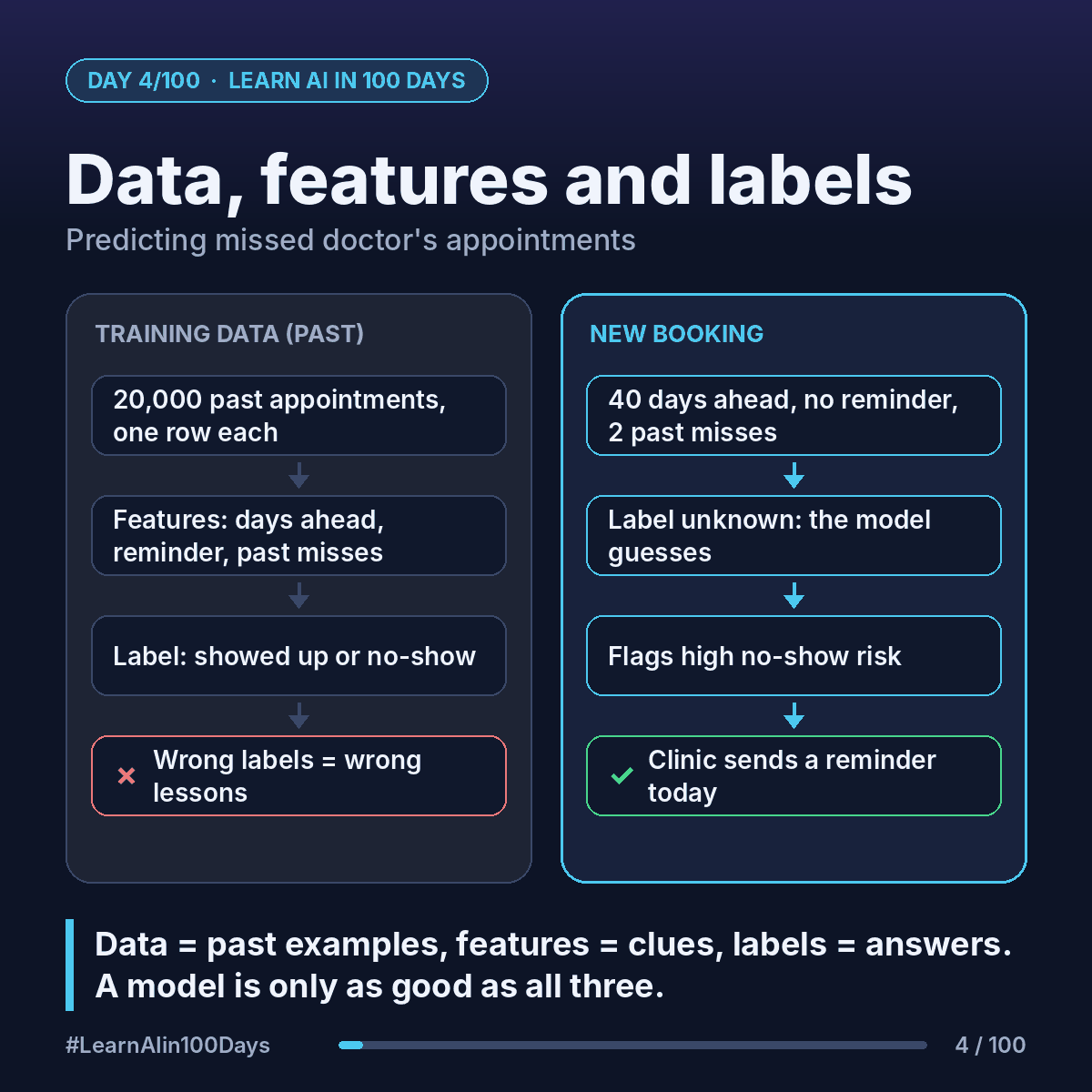
Yesterday: how a machine learns. Today: what it learns from. Three words you'll hear constantly:
- Data: the past examples. Each row is one example.
- Features: the columns of clues the model gets to look at.
- Label: the column with the right answer, the thing we want to predict.
Training = showing the model rows where the label is known, so it finds how features connect to it. Later it sees a new row with no label and guesses.
Walkthrough: predicting missed doctor's appointments
No-shows cost a clinic time and money. It wants to spot risky bookings early, so staff can send an extra reminder or offer the slot to the waitlist.
Data: 20,000 past appointments, one row each.
Features (the clues):
- Days between booking and visit (2 or 45?)
- Reminder text sent? (yes / no)
- Patient's missed visits in the past year (0, 1, 3…)
- Time slot (8 AM or 4 PM)
Label (the answer): showed up, or no-show.
Three example rows:
- Booked 2 days ahead, reminder sent, 0 past misses, 10 AM → showed up
- Booked 45 days ahead, no reminder, 3 past misses, 8 AM → no-show
- Booked 30 days ahead, reminder sent, 1 past miss, 4 PM → showed up
After training on all 20,000 rows, a new booking arrives with no label: 40 days ahead, no reminder yet, 2 past misses. The model flags high no-show risk, so the clinic sends a reminder today.
Garbage in, garbage out
The model only knows what the spreadsheet tells it. Four common traps:
- Wrong labels: if late cancellations were logged as "showed up," the model learns from false answers.
- Missing clues: if the real reason is a bus route that stopped running, and no column captures it, the model can't see it.
- Unrepresentative data: trained only on one city clinic, it may fail at a rural one.
- Cheating features: "cancellation fee charged" predicts no-shows perfectly, but you only know it after the visit.
That's why data prep often takes most of the time on real AI projects.
Where you see it at work
- Banking: features like transaction amount, location and time; label: fraud or not.
- Insurance: features from a claim form; label: approved, or sent for review.
- Retail: features like basket size and visit frequency; label: did the customer use the coupon?
In one sentence
Data is the past examples, features are the clues, labels are the answers, and a model is only as good as all three.