The concept
Generative AI: models that create new content (text, images, audio, code) instead of only choosing a label or a number.
The models from Days 1–14 were mostly discriminative: they sort inputs into categories or predict a value. A generative language model is trained to answer a different question: "given everything so far, what word most likely comes next?" Repeat that thousands of times and you get a paragraph, an email or a report.
Like the difference between a multiple-choice exam and an essay exam. Same knowledge, very different output.
Walkthrough: one insurance claim, two kinds of AI
A customer files a water-damage claim for a burst pipe.
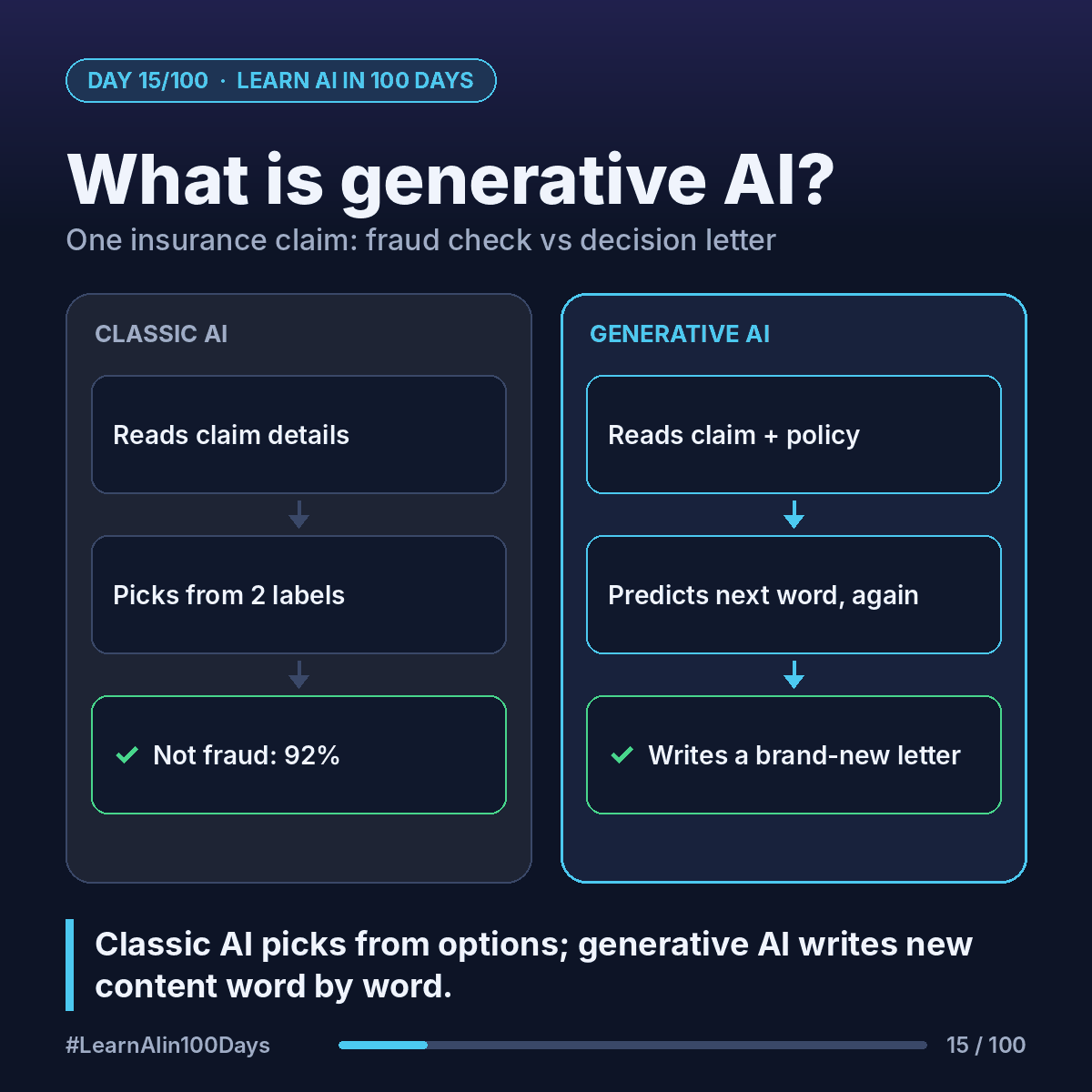
Classic model: the fraud check.
- Inputs: claim amount, policy age, prior claims, time to report.
- Output: one of two labels. Say, "likely fraud: 8%, not fraud: 92%".
- It can never say anything outside those two options.
Generative model: the decision letter.
- Input: the claim notes, the policy wording and an instruction: "Draft a plain-English letter approving this claim, minus the deductible."
- It starts with "Dear" → then "Ms." → then "Patel," → each new word chosen based on all the words before it.
- Output: a brand-new letter explaining what's covered, the deductible, and next steps. That exact letter never existed anywhere.
Same claim, two jobs. One model judges, the other writes.
Why "one word at a time" matters
- The model isn't looking anything up. It's producing what is likely to come next, based on patterns it learned.
- That's why output can be fluent and still wrong (more on that on Day 22).
- It's also why it's flexible: the same model can draft a letter, summarize a policy or answer a question.
Where you see it at work
- Insurance: first drafts of claim letters, adjuster note summaries.
- Banking: drafting replies to customer complaints for an agent to review.
- Healthcare: summarizing visit notes into a patient-friendly version.
- Business analysis: turning meeting notes into draft user stories and acceptance criteria.
The pattern in a regulated industry: AI drafts, a human checks and sends.
In one sentence
Classic AI picks from options it was given, while generative AI creates new content by predicting the next word, over and over.